Posts

Guru Gobind Singh: Luminous in Life & Legacy

Image
Wine may take an age to mature but a great spirit is timeless. Time does not define or confine divinity. Years are not a necessary condition for a life of spiritual lustre. Guru Gobind Singh’s comparatively short life transformed into immortality. Born in 1666, his spiritual growth was rapid just as much as it was transformative for not only the Sikhs of Nanak but for all who were despondent in heart and faith. North India was in turmoil. The Mughal Emperium that had come to define the ethos of the last two centuries was in a turbulent state. The turmoil was due to the socio-political churning that was being witnessed and was inevitable. The eclectic atmosphere created by sages of, both, the Sufis and the Sants of the Bhakti Movement was an expression of the spiritual turmoil in the people across the social landscape of the Mughal Empire. Kabir, Chaitanya and Nanak and other kindred souls had forewarned the masses as well as the elite to lead a life of inner contentment through direct ...

Between the Cup and the Lip

Image
source The acquisition of the Doon Valley by the British as a result of the Anglo-Gorkha War of 1814-15 opened up a Pandora’s Box for them. They not only got possession of a region that was in many ways unsurpassed in natural charms with a climate that was salubrious and congenial to the European constitution, but also opportunities opened for a range of profitable ventures. Of the many cultural preferences that the British had, for long enjoyed and also bequeathed as a pleasant legacy, was tea drinking – the virtues of which were extolled by Cooley Cibber, the poet: “Tea! Thou soft, thou sober, sage, and venerable liquid,… thou female tongue-running, smile-smoothing, heart-opening, wind-tippling cordial, to whose glorious insipidity I owe the happiest moment of my life, let me fall prostrate.” Not surprising, the benefits of tea were lauded by the Chinese philosopher Lo Yu: “Tea tempers the spirits, harmonises, prevents drowsiness, lightens and refreshes the body and clears the percep...

How Sweet Was Our Valley

Image
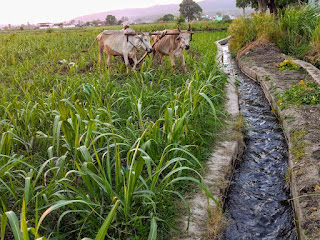
In the second half of the nineteenth century, Cautley’s Canals were bringing the mountain torrents to the Valley tamed by check dams, sluices, weirs and canals that modulated the flow with the finesse of a conductor of a philharmonic orchestra. The sweet clear water often carrying a green twig or a leaf from the foliage of upstream banks came down to villages which were celebrating the goodness of plenty of water where earlier there was none. Thus Cautley’s canals, while increasing the land revenue for the British through extension of agriculture, also added new zest among those farmers who could foresee the potential that now their fields had become capable of. While the government charged a cess for supplying canal water, the music from the same was sweet and free. The Doon Valley hitherto deceptively verdant with luxurious forest cover on the undulating Siwaliks and also in some swathes of wooded spaces had little water for irrigation as it flowed in gorges from which drawing water ...

Forests and Forest Follies

Image
When the pilgrims to the Guru’s newly settled abode in the Doon Valley came trudging through the defiles and wooded wilderness of the Siwaliks, the lofty Himalayas were spied only rarely. So deep were the forests and foliage so abundant that the snowy tops were a fleeting image for the callus-footed, weary bodied seekers of the spiritual cup. Streams bubbled at every few yards and no lips were parched having slaked their thirst of the sweet waters thereof. The birds sang the silence of the Sal trees to cheer the most despondent soul. Doon Valley, terra incognita three centuries ago, was a treasure undiscovered or perhaps a solatium for Guru Ram Rai, who wandered the wilderness where none could see him in his renunciation, after his disappointment in affairs of the world. His treasury empty but his domain set apart with a wealth that would attract the attention of the high and the mighty who sought the valuable timber for creating their sumptuous palaces and pleasure houses. The ruling ...

Nalapani: A Hill Once Red

Image
It would be unthinkable for an author of popular novels to have the hero die on the first page of the book. It would violate the grammar of a good plot to an entertaining story. But epic battles are not scripted by pens of writers but by blood drops on hallowed grounds. Nalapani would have been different in its emotions and haunting appeal had the two protagonists been other than Major General Rollo Gillespie and Balbhadra Kunwar, or even if the battle had been fought between two other nations. Major General Rollo Gillespie. Balbhadra Kunwar Gillespie, 48, and Balbhadra, 25, were men in their prime, one at peak of his career, the other capable of achieving anything that he put his mind and might to. The two newly emergent imperialistic and expansionist powers in the sub-continent were at the end of the 18th century on a collision path. The British, rather the East India Company, avaricious to the core and relentless in its pursuit of pelf, saw the region as its private burrow. The risi...

Van Gujjars, the “Lesser People”

Image
The Doon Valley and its Himalayan hinterland for over two thirds of its undulating length and width were clothed in forests of varied flora and fauna. The geomorphology and ecology was unmatched in its beauty, enriched by the boon of two mighty and revered rivers, the Ganga and the Yamuna, and delineated in the south by the verdant Siwaliks. Its charms were legendary as they were enchanting. Memoirs of travellers to the Doon Valley are studded with descriptions of the unique grandeur of its wilderness. In the summer of 1835, Captain Trower crossing the Doon Valley penned his observation: “I cannot describe the mingled emotions of awe and delight which thrilled me as I came up, through these magnificent mountains. I have endeavoured to give an idea of the kind of scenery but pen and ink cannot convey the effect.” The swathe upon swathe of forested Siwaliks and foothills of the upper Doon Valley while pleasing to the eye were nevertheless not very hospitable to the needs of everyday exis...

The Kools of the Valley

Image
Water has been central to the growth and stability of all civilisations that have appeared ever since homo sapiens discovered that they were the chosen ones amongst all species by the virtue of having two thumbs, which enabled them not only to grip objects but do it with dexterity. Water that was abundant was also uncontrollable and destructive but had immense potential to provide security amidst an unpredictable environment. The need for food security to increase size of social groups that sought a stable supply of essential commodities impelled the adoption of socially relevant norms and institutions to deliver on this prime necessity. Thus, from its formative stages, a civilisation sought means to control access to water and its distribution to its members. Control over water gave nascent states their power over the people and their livelihood. Several millennia later, water continues to be the most controlled commodity and an exclusive state monopoly. In the Doon Valley, the...